
Historically referred to as “black gold” or “the king of spices”, black pepper is a ubiquitous spice in most cooking worldwide. In some regions, it’s even used medicinally for its anti-inflammatory properties. Piper nigrum is the botanical name for the plant also known as black peppercorn or black pepper. It is one of the most commonly grown spices in the world! This plant grows as a vine with small, dark green, heart-shaped leaves. It can take up to four years when grown from seed to produce pendulous spikes that then flower and eventually turn into clusters of small peppercorns.
Growing the black pepper plant has been a fun challenge for me this year. My process for taking on the cultivation of any new-to-me plant involves a lot of research, tons of observation, and a good bit of unlearning. From my research, I learned that the recommended, optimal growing conditions for this tropical plant are warm temperatures, high-humidity, and full sun to partial shade. However, from observing my black pepper plant, I learned that those documented recommendations aren’t applicable to my setting and needed to be disregarded. Come to find out, the optimal “warm weather” is meant to not exceed 85 degrees and humidity is best to be around 50%. Where they do that at?! Around here, we’re above 85 degrees by April with 150% humidity. (That’s only a mild exaggeration.)
My black pepper plant was on a rapid decline. So, I moved it to a part shade situation. Nope. It was still crashing. So, I moved my plant to grow in FULL SHADE. It only took a couple of weeks for the plant to signal that I’d found the optimal growing conditions for our environment. Its leaves started turning green and perking up. Then, I saw new growth appearing! Things were on the mend. Before I knew it, I had long, dangling vines and it was time to experiment with propagating.
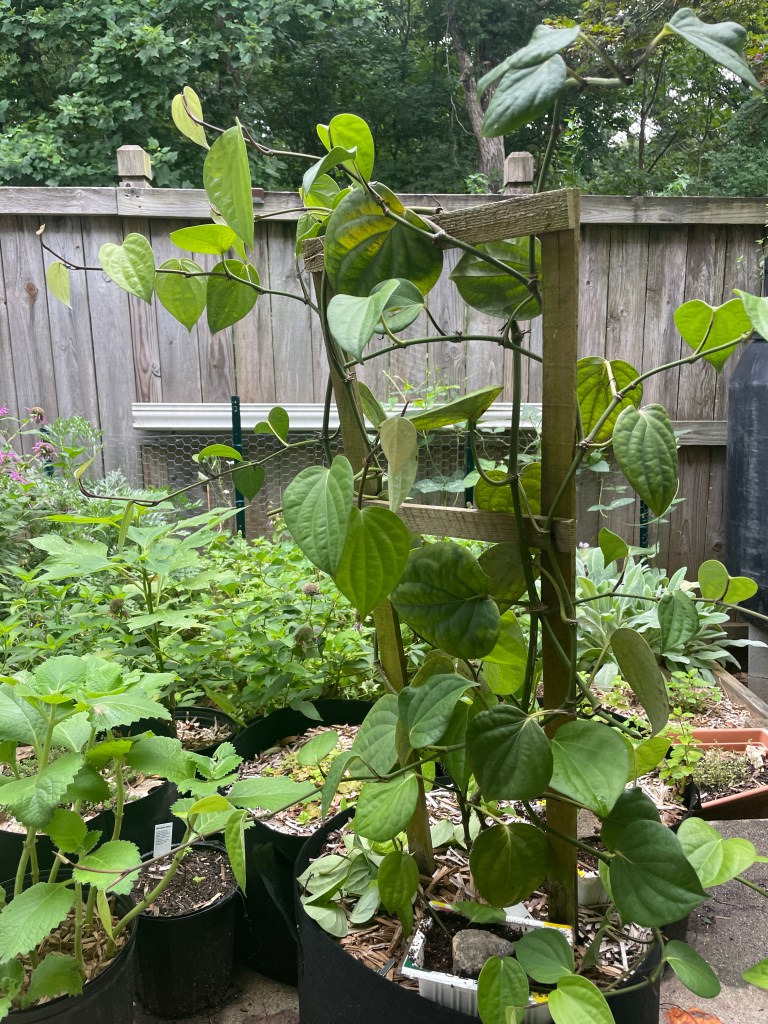
I won’t lie. I was really nervous about trying anything on my black pepper plant after all we’d been through together, but I knew I had to do it. (Cloning plants is insurance and an investment in the future.) I decided to treat my black pepper plant like I do my strawberry plants. I “grounded” vines from the mother plant into soil and waited. I also took some cuttings from the mother plant to try water propagating it like a pothos plant.
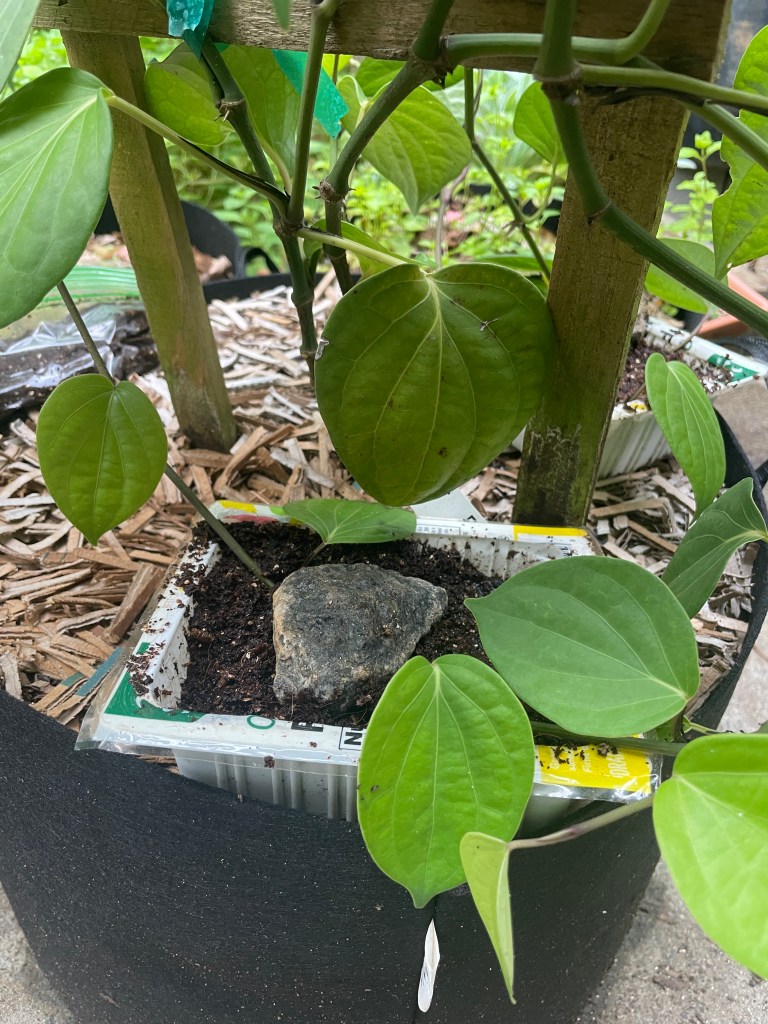
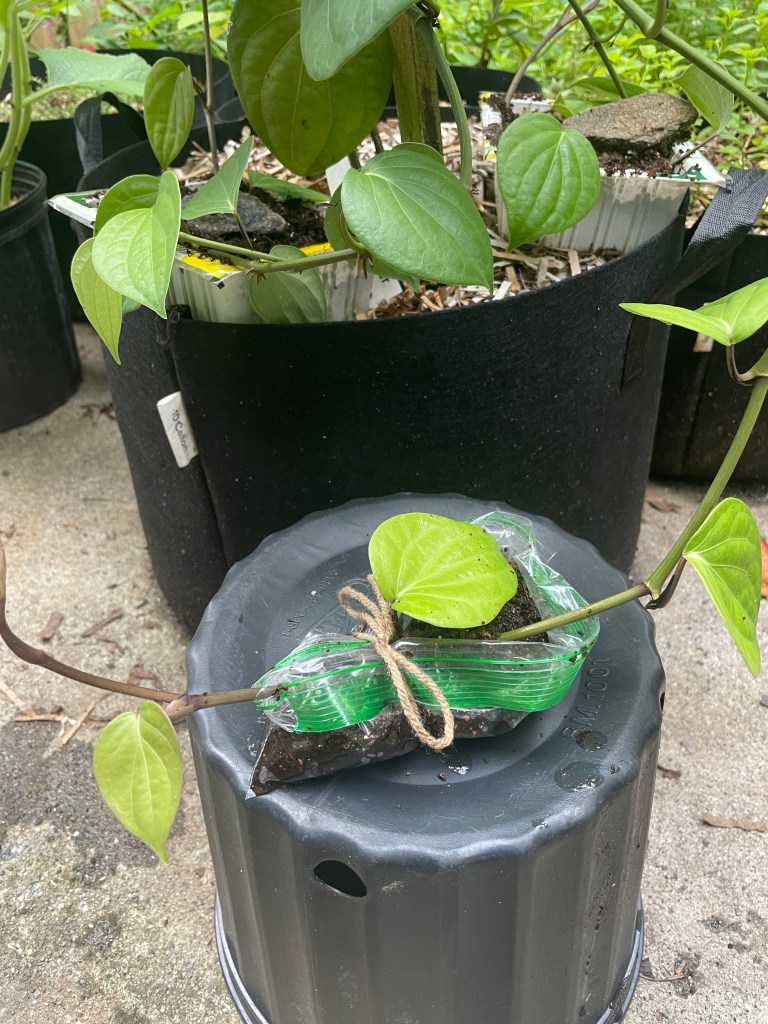

Approximately three weeks later, all of the vines in soil are growing longer and developing roots. No signs yet of root development on the cuttings that are in water.
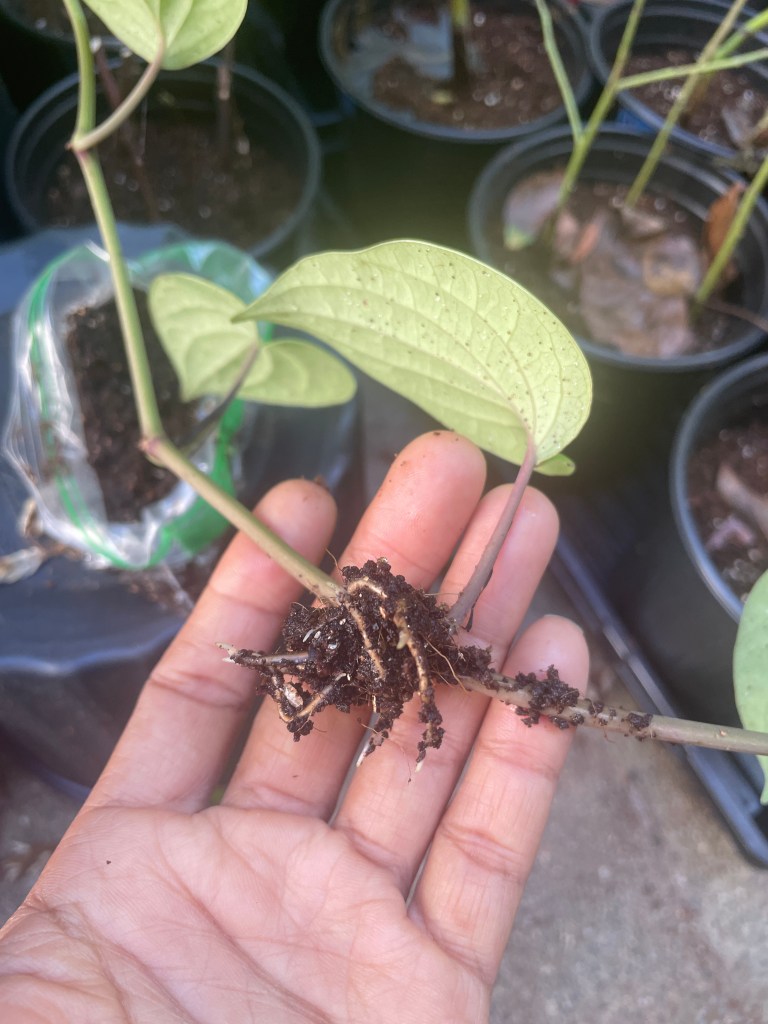
Apparently, the black pepper plant will stop growing when temperatures drop below 65 degrees Fahrenheit. I hope that we can sustain warm temperatures long enough to fully root my new pepper plants. For the winter, my big black pepper plant and her babies will be moved inside our pallet greenhouse. We haven’t finished constructing this greenhouse yet, but we aim to within the next few months. I refuse to let the frost kill them. If we don’t finish the greenhouse build, the pepper plants will be inside our house along with all of my fruit trees that’ll need winter shelter too. That visual alone should serve as ample motivation to finish that project!
 Uhuru Farms
2 responses to “HOMEGROWN BLACK PEPPER”
We’re just crazy enough to enjoy that visual🤪😄
LikeLiked by 1 person
🤣
LikeLike