
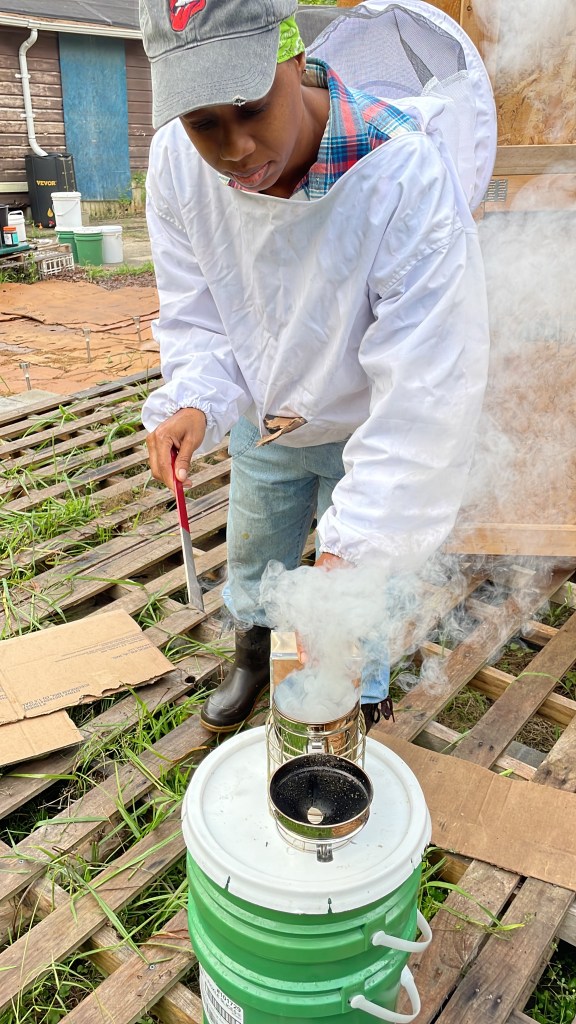
I did two hive inspections in our apiary to monitor how our bees are doing. While I was in the hive, I reduced the entrance (to prevent robbing during summer months), refreshed the hive beetle oil traps (which were filled with mostly ants this time – not beetles), and added more Diatomaceous Earth to the bottom board (another form of natural pest control).
The bees seem to be strong and active. I’m hoping they’ll be able to fill out the frames of their new hive box before our first frost. With two hive boxes of (mostly) honey, I can be more confident that they’ll have enough honey stores to feed themselves during their first winter on the farm. I don’t want to have to supplement their feeding, but will if it’s necessary for their survival.
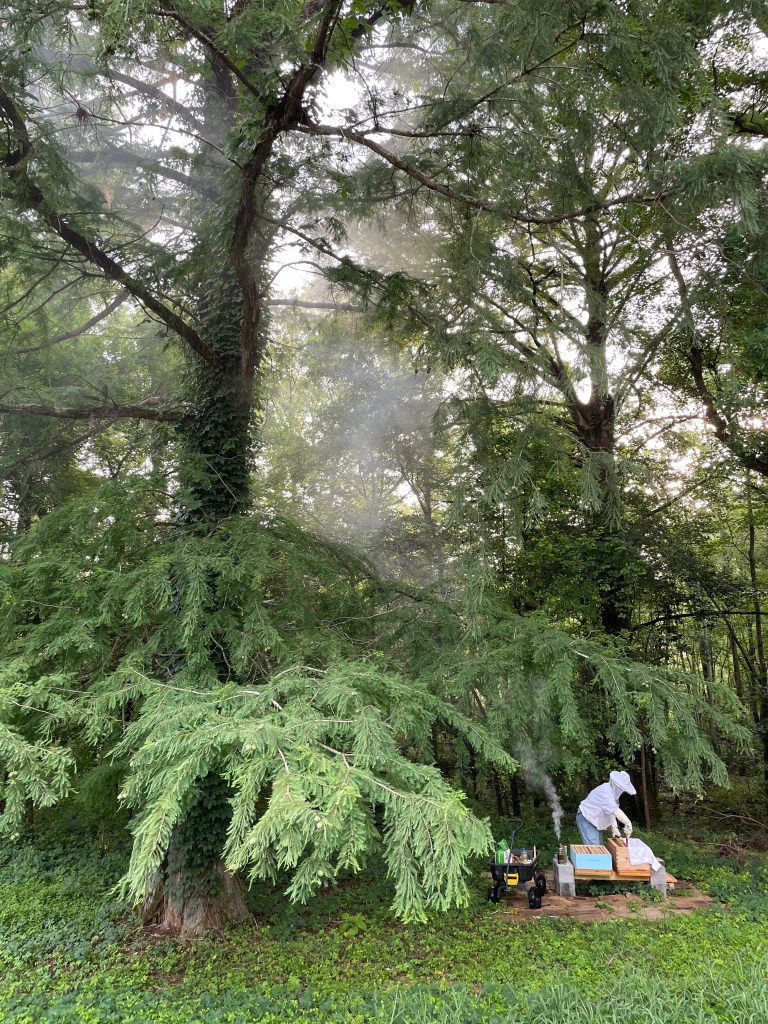
As a beekeeper, I want to create an ecosystem where my bees thrive, primarily, independently. My goal is to intervene as little as possible and, when necessary, only utilize natural, phytochemicals – not manufactured or artificial chemicals. With this goal in mind, I’ve been deep diving into natural beekeeping resources. I’m encouraged to have discovered practices from around the world that I’m implementing in my apiary. This includes growing beneficial plants proven to naturally strengthen the bees’ health. More on that later 😉
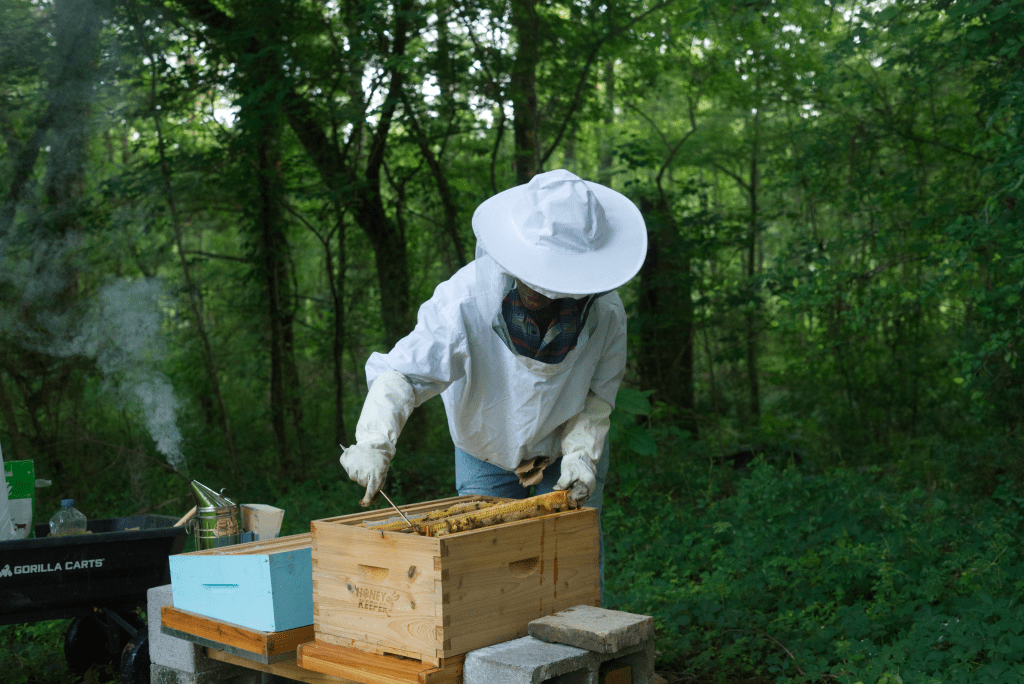
Outside of the States, it’s more common to practice beekeeping naturally. In fact, in many countries, the widely accepted practices and treatments used in American beekeeping are PROHIBITED for health and safety reasons. Let that sink in.
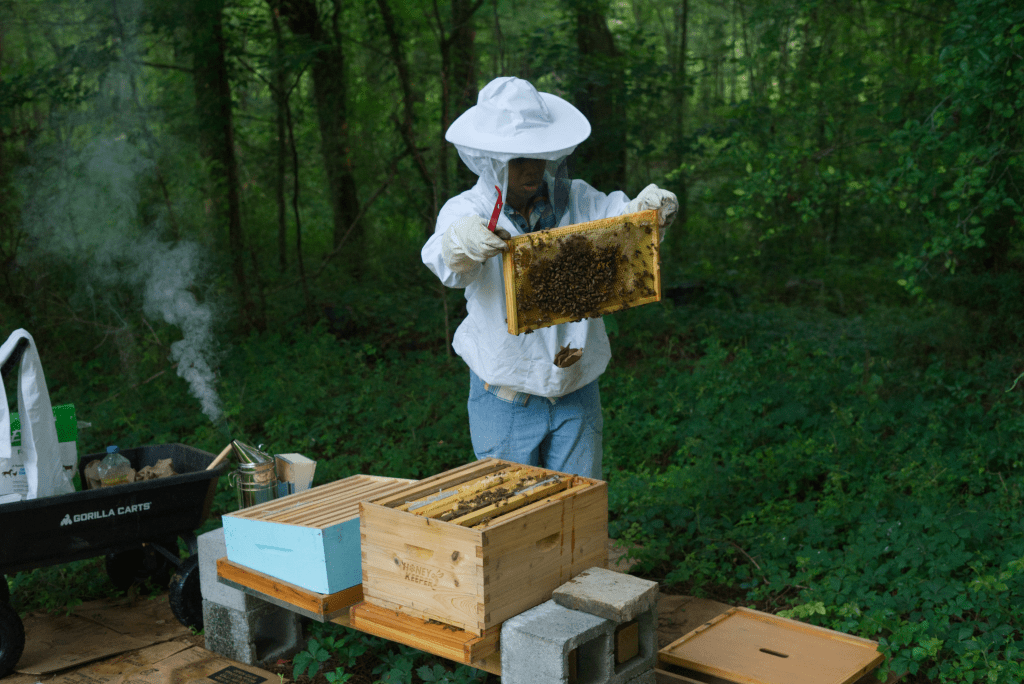
There’s so much work ahead on this road less traveled, but I’m motivated to expand pollinator safe spaces, continue learning, and share what I’m learning with aspiring Black beekeepers. The remainder of 2024 inside my bee bubble is sure to be fun-filled and action-packed!
 Uhuru Farms
2 responses to “THIS MONTH AT BEE SCHOOL”
Looking like a whole👏🏾 National👏🏾 Geographic👏🏾 spread👏🏾‼️
Love to see it🤩
LikeLiked by 1 person
LMBO!
LikeLike