
What started as nearly microscopic seeds three years ago, are now ginormous lemon balm (Melissa officinalis) bushes that I harvest regularly to infuse zesty lemon flavor into all kinds of culinary deliciousness.

When I heard of the existence of a plant that’s like lemon balm, but smells and tastes like oranges, I went on the hunt for Melissa officinalis mandarina aka “orange balm”.

Though it’s the “long and hard way”, I prefer to grow plants from seed for a multitude of reasons. Unfortunately, I was unable to find reasonably priced orange balm seeds. I did, eventually, find an online seller offering 4-inch orange balm plant starts (for more money than I wanted to spend😣). I purchased two of these little plant starts last Fall, grew them through the Winter, and began steadily propagating them this Spring.
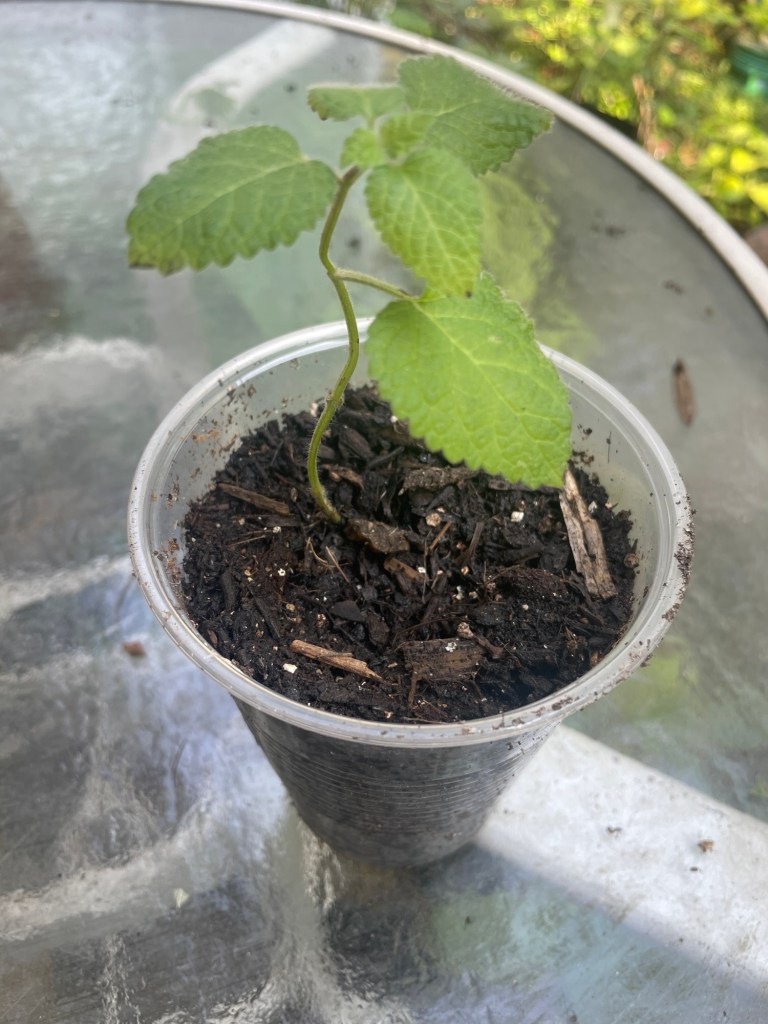
Once an orange balm stem reaches 6 – 8 inches long, I cut it from the plant, put it into a glass of water, and wait a few weeks for roots to develop before transferring the rooted stem cutting into soil. So far, I’ve turned those two little pricey orange balm starts into ten new plants. This time next year, I expect to have at least doubled my number of orange balm plants. I’m anticipating an abundant Year 3 harvest of this tangy perennial herb😋. Can’t wait‼️
DID YOU KNOW?!
In Greek, Melissa means “honeybee”. The name derives from the Greek word for honey, méli (μέλι). The name is also associated with a figure in Greek mythology, a nymph who cared for the infant Zeus by feeding him honey.
Melissa officinalis (aka “lemon balm”) is a natural, safe, and low-cost alternative for baiting bee swarm boxes as its scent mimics nasonov pheromones – a signal that scout bees use to mark a good re-homing location.
 Uhuru Farms