
Great news! My wild bees SURVIVED the Winter and random snow days🥳. Most importantly, they did so without my intervention. I didn’t have to insulate, feed, or water them all season long. This is the way nature intended. Some might consider being hands-off as “risky”, but I believe in nature and only want to be a beekeeper if I can do so as naturally as possible.
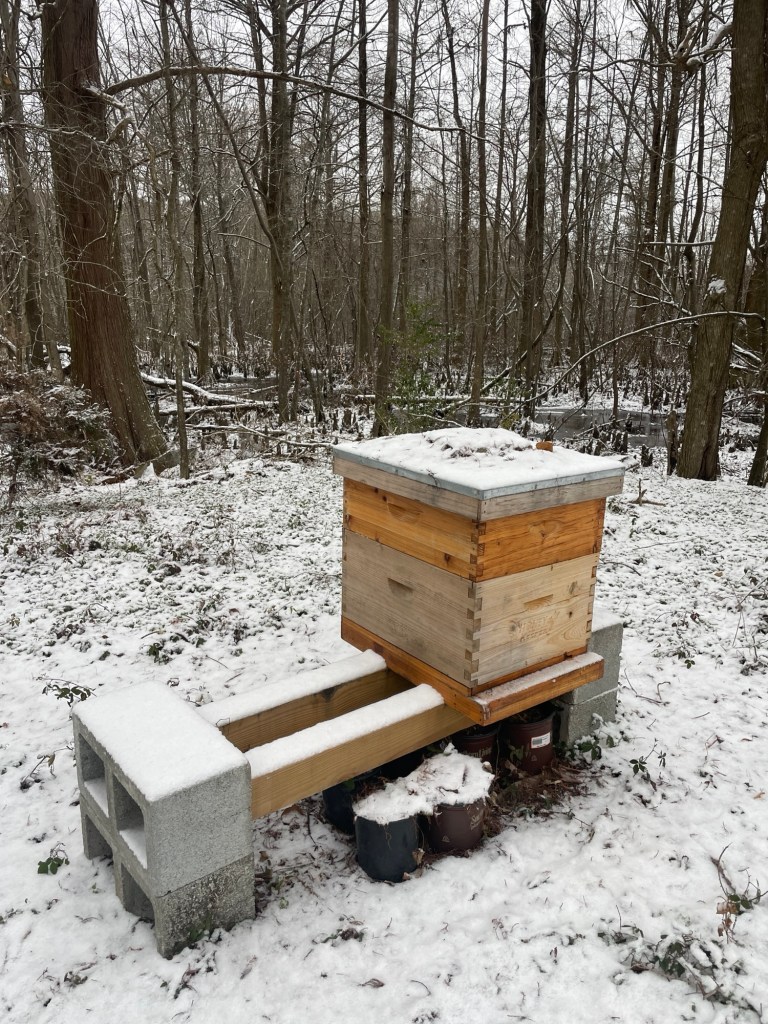
As we enter a new growing season, I’m mindful that swarming is a natural process essential to bee health. I do not participate in the common practice of inspecting hives for queen cells and destroying the cells to prevent bees from swarming. Alternatively, I’m intervening to do preventative hive splits so my bees won’t deem it necessary to swarm and am actively expanding our apiary.
Last year, my feral bees swarmed just weeks after moving onto the farm. I was unable to capture the swarm. In hindsight, I had made two major mistakes:
– underestimated the colony’s strength and
– prioritized other farm tasks (believing the bees could wait).
This year, I am determined to not make the same mistakes, so being proactive is crucial.
Last year’s swarm occurred prior to finally getting around to doing my first hive inspection in the 3rd week of April. Unfortunately, I can’t identify the exact date of the swarm, but I know that bees won’t swarm if weather conditions aren’t right. They prefer sunny days with CONSISTENT temperature lows well above 40 F degrees and highs above 60 F degrees. To identify “swarm weather”, I started by analyzing previous year’s weather patterns prior to the 3rd week of April against this year’s weather forecast for the same period. I determined that, this year, the first week of April would be ideal for doing my preventative hive split and planned my bee work schedule accordingly. I had a solid plan. That was until I saw this😳 [captured on video below].
It was the second week of March and my bees were VERY active and clearly crowded inside their hive. They were preparing to swarm. According to my analysis [*pushes glasses up on nose], this wasn’t supposed to be happening for another 2-3 weeks, but it was obvious that my bees had other plans. I tossed science aside and let nature guide me.
Last month, I split my first hive into two active hives and baited two new swarm hives.
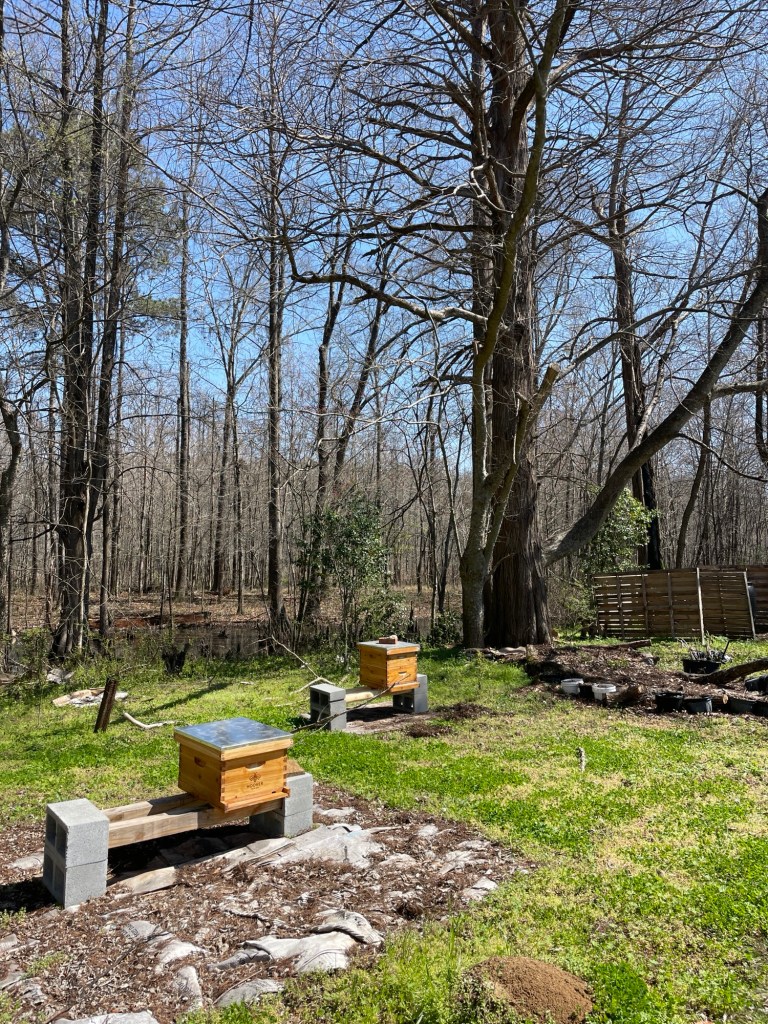
The bees appeared to have recovered from the stress of the hive split in a matter of hours. They are very strong. I’m confident that they’ll do well this year and plan to inspect the hives this month to make sure they’re on track. I’m keeping an eye on my baited boxes and am hopeful that wild swarms move-in🤞🏾. Adding three free bee colonies to the apiary this year would be A-MAZING! Stay tuned🫣
Full disclosure: I know that nature is always right, buuuut before fully committing to doing my impromptu split last month, I DID check the weather forecast real quick😅. I know that it takes (16) days to make a queen bee and (21) days to make female worker bees. That means, as long as the weather was decent for a good chunk of the 30-days ahead, my new colony could work to rebuild, if necessary. Just in case😉.
 Uhuru Farms
2 responses to “NATURE WAITS ON NO ONE”
Great job using Nature & science together to make sound decisions👏🏾
The bees are going to love their roomy new hives & all the pollen this Summer🙌🏾
LikeLiked by 1 person
Thank you! Hoping they’re very happy this season🙏🏾
LikeLike